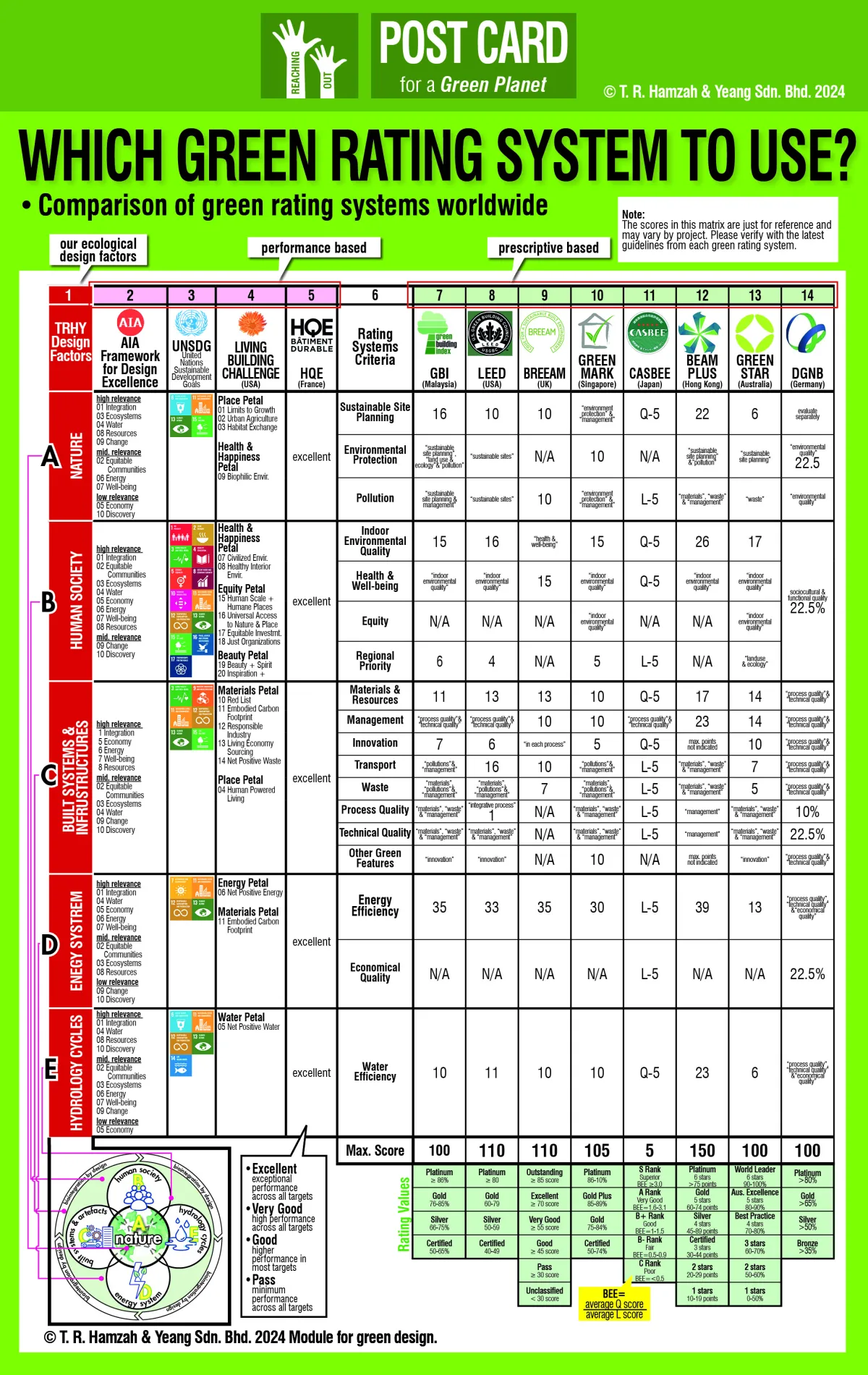
This comparison chart evaluates global green rating systems to help architects, planners, and developers identify the most suitable framework for sustainable architecture projects.
Key Features:
Performance-Based vs. Prescriptive-Based Systems:
- Performance-based systems, such as Living Building Challenge and HQE, focus on measurable results like environmental quality and resource efficiency.
- Prescriptive systems, like LEED (USA) and BREEAM (UK), follow detailed guidelines and benchmarks.
Evaluation Criteria:
The chart compares factors such as:
- Sustainable Site Planning
- Indoor Environmental Quality
- Energy Efficiency
- Water Efficiency
- Materials & Resources
- GBI (Malaysia) and CASBEE (Japan) score highly in specific criteria like indoor environmental quality and energy performance.
Holistic Approach:
T. R. Hamzah & Yeang’s ecological design factors align with global standards, promoting eco-friendly building design that addresses human well-being, biodiversity, and carbon footprint reduction.
Scoring Framework:
Systems are rated on a 100-150 point scale, with Platinum and Gold certifications denoting excellence.
DGNB (Germany) and Green Star (Australia) emphasize economic quality and sustainability beyond construction phases.
Takeaway:
Choosing the right green rating system depends on the project’s goals—whether prioritizing energy savings, water efficiency, or innovative design. This guide ensures a balanced approach to achieving sustainability and regenerative outcomes in every build.