For over five decades, Dr. Ken Yeang has championed an architectural approach that views buildings not as isolated objects, but as living components within larger ecological systems. Long before sustainability became mainstream, his work explored how architecture could function as an extension of nature—integrating climate, biodiversity, energy flows, and human experience into a coherent ecological framework.
At T. R. Hamzah & Yeang (TRHY), this philosophy continues to shape our approach to architecture, master planning, and urban design.
Ecology as the Foundation of Design 🌍
Conventional architecture often treats buildings as independent entities separated from their surroundings. Ecological design begins with a different premise: every building exists within the biosphere and must interact positively with it.
Architecture should be conceived as a constructed ecosystem—one that exchanges energy, water, nutrients, and biological resources with its environment. Rather than minimizing damage, ecological design seeks to create regenerative relationships between the built and natural worlds.
This shift requires architects to understand ecological processes as deeply as they understand structure, form, and aesthetics.
Designing with Climate ☀️
Before relying on mechanical systems, architecture should first respond to local climate conditions through passive design strategies.
In tropical regions, this means considering factors such as:
- Solar orientation
- Prevailing wind patterns
- Humidity levels
- Rainfall cycles
- Natural daylight availability
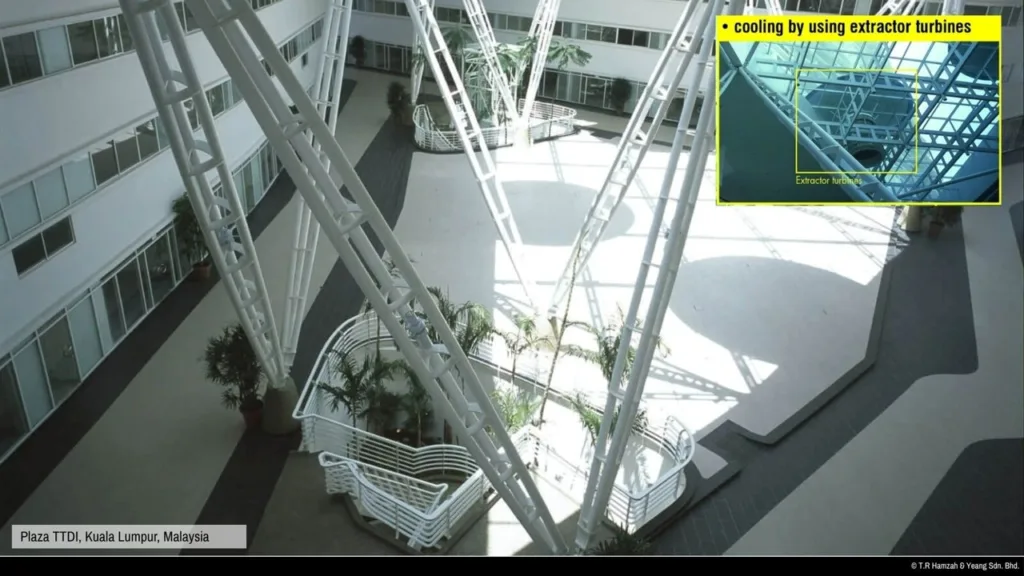
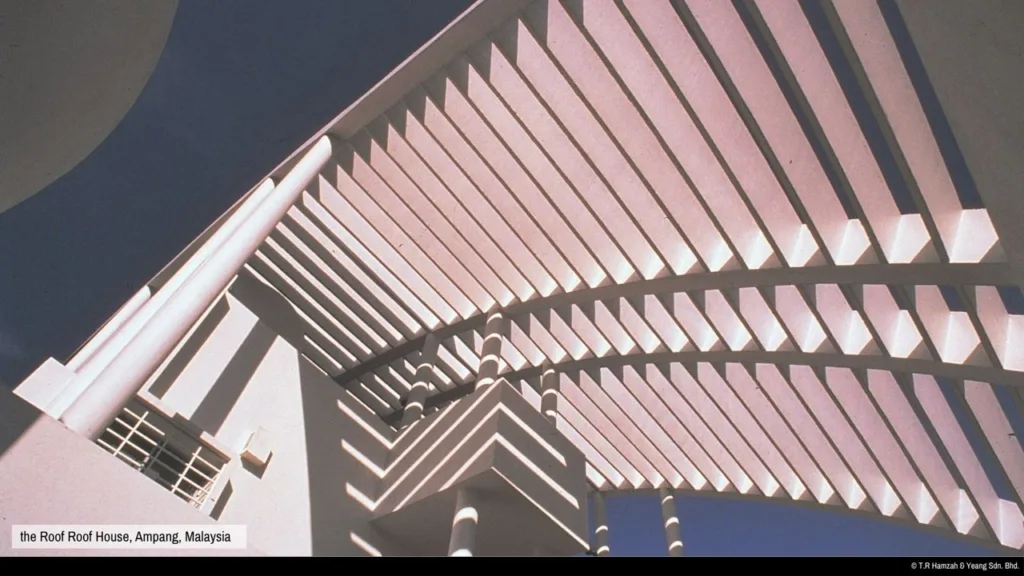
Bioclimatic design employs strategies such as natural ventilation, solar shading, daylight optimization, thermal buffering, and climate-responsive building envelopes to reduce energy consumption while enhancing occupant comfort.
The objective is simple: allow the building itself to perform as much environmental work as possible before introducing technology.
Integrating Living Systems into Architecture
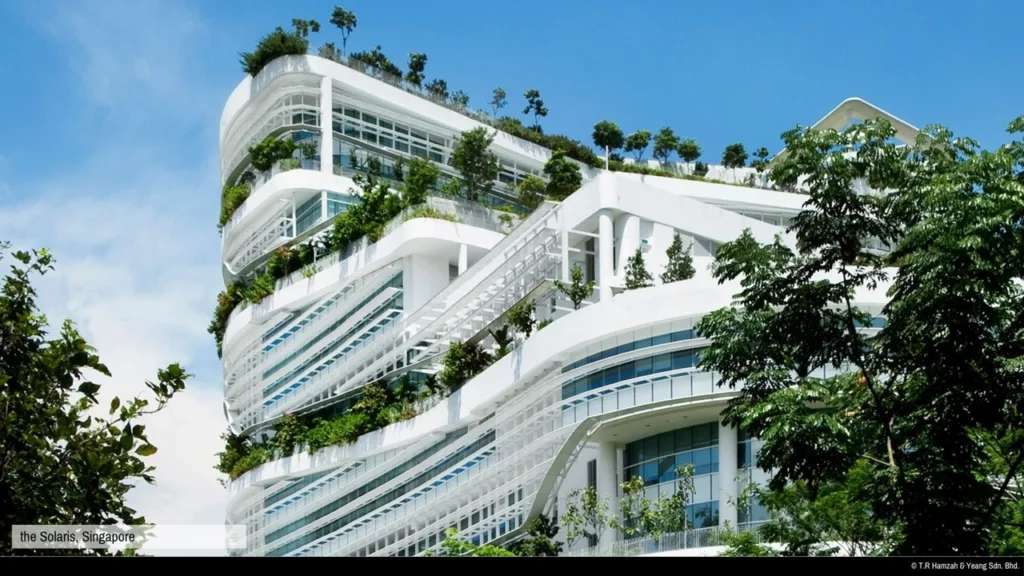
Nature should not be treated as decoration applied after a building is completed. Vegetation, habitats, and ecological networks should become integral components of the architecture itself.
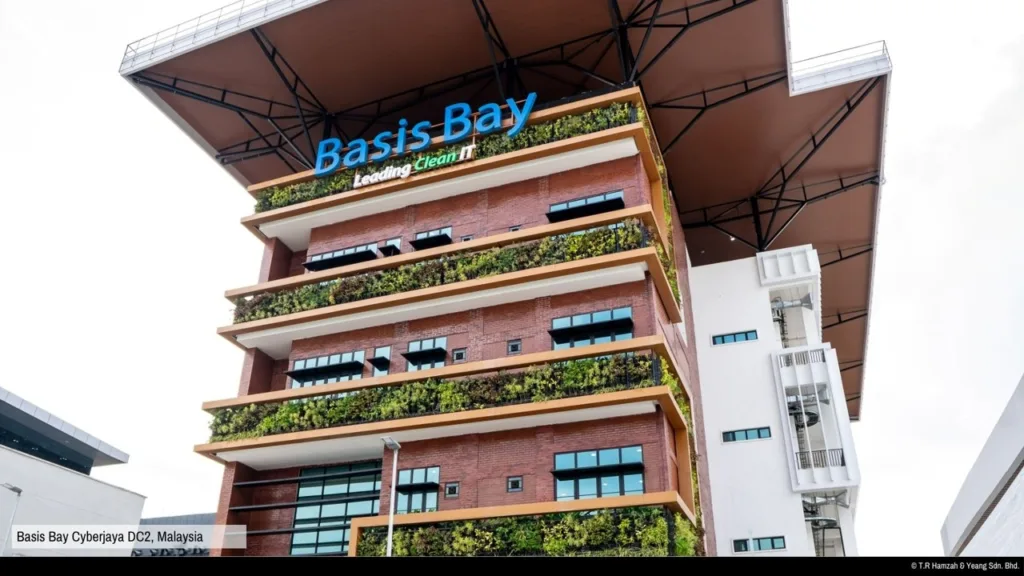
Green roofs, vertical landscaping, sky gardens, ecological corridors, and productive landscapes can perform multiple functions simultaneously:
- Cooling the building
- Reducing urban heat island effects
- Supporting biodiversity
- Improving air quality
- Managing stormwater
- Enhancing human well-being
By integrating living systems into the architecture, buildings evolve from static structures into dynamic ecological habitats.
Closing Resource Loops ➿
Natural ecosystems operate through circular processes where waste from one organism becomes a resource for another. Ecological architecture seeks to emulate this principle.
A building should be understood through its flows:
- Energy
- Water
- Materials
- Waste
- Carbon
The goal is to reduce dependency on external inputs while maximizing efficiency and resource recovery. Rainwater harvesting, renewable energy generation, material reuse, greywater recycling, and circular construction strategies are all part of creating more resilient built environments.
The future of architecture lies not in linear consumption, but in closed-loop ecological performance.
Thinking Across Scales
Ecological challenges cannot be solved at a single scale.
A truly ecological design approach works simultaneously across multiple interconnected levels:
Building → Community → City → Region → Biosphere
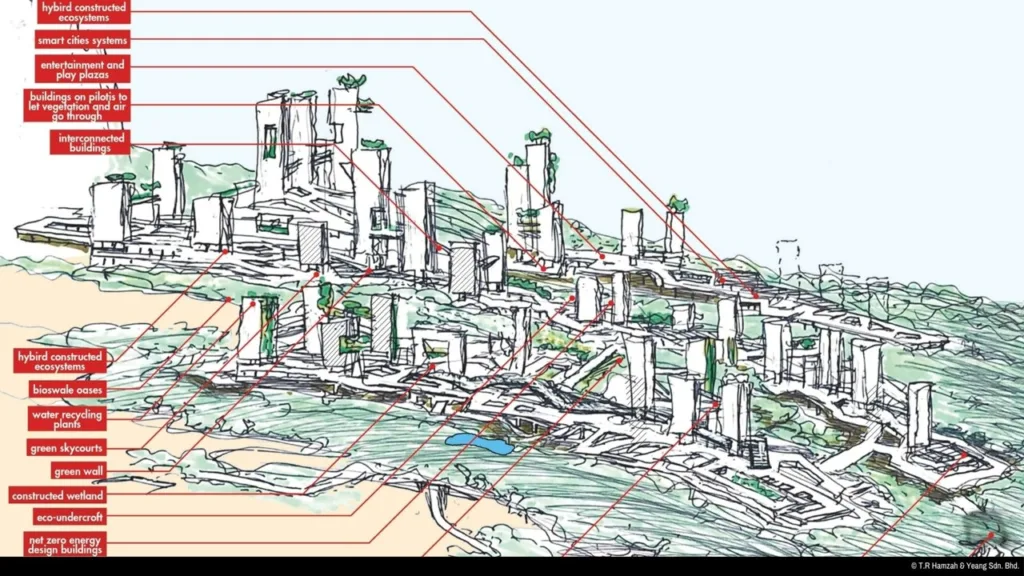
Every project should contribute positively to larger environmental systems. A building may improve local microclimates, but it should also support broader objectives such as biodiversity conservation, watershed protection, sustainable mobility, and regional resilience.
This multiscale perspective has informed many of Ken Yeang’s projects, including master planning initiatives that integrate ecological infrastructure, transportation networks, landscape systems, and urban development into a unified framework.
Human Experience at the Centre
Ecological performance alone is not enough.
Architecture ultimately exists for people. Ecological design must therefore enhance human well-being, social interaction, and cultural identity.
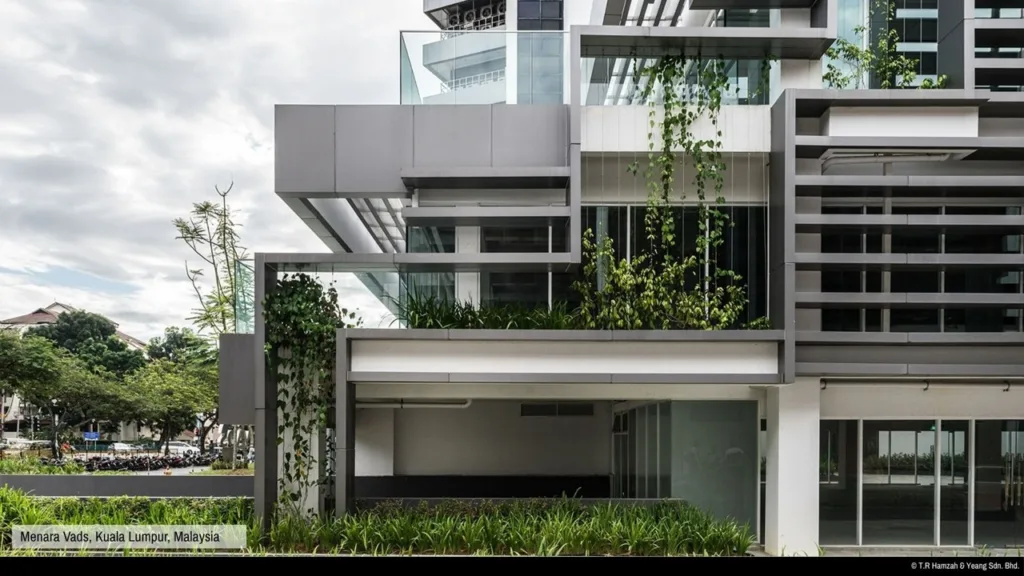
Public spaces, community gardens, walkable environments, and accessible civic amenities are essential components of successful ecological design. Buildings should create opportunities for people to connect with nature and with one another.
A healthy city is not only environmentally efficient—it is socially vibrant and culturally meaningful.
Towards a Regenerative Future
As climate change, biodiversity loss, and resource scarcity increasingly shape the built environment, architecture must move beyond conventional notions of sustainability.
The next evolution is regenerative design: creating buildings and cities that actively contribute to ecological health rather than simply reducing harm.
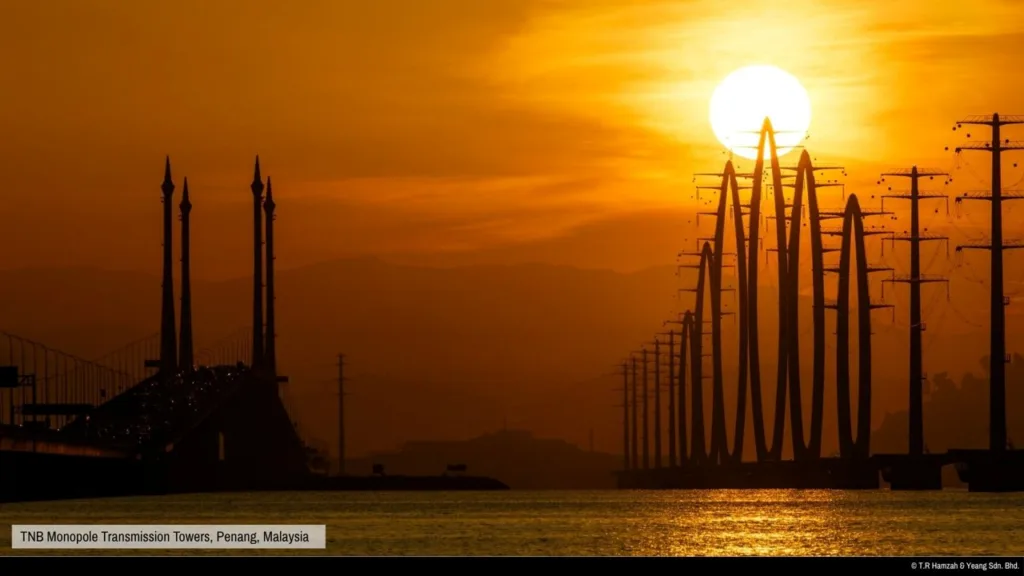
At TRHY, we continue to advance this vision through architecture, urban design, and ecological master planning informed by decades of research and practice.
The question is no longer how buildings can coexist with nature.
The challenge is how architecture can become part of nature’s living systems once again.
“The building is not a static object, but a living system within the biosphere.” — Dr. Ken Yeang